 info@globaxsolutions.com
  +91-790-200-2800
Export Pricing Strategies: How to Set a Price That Wins International Buyers and Guarantees Profit
Pillar 1: The Foundation – Cost-Based Pricing
Every successful pricing model starts here. This method ensures all your costs are covered, guaranteeing a floor for your profitability.
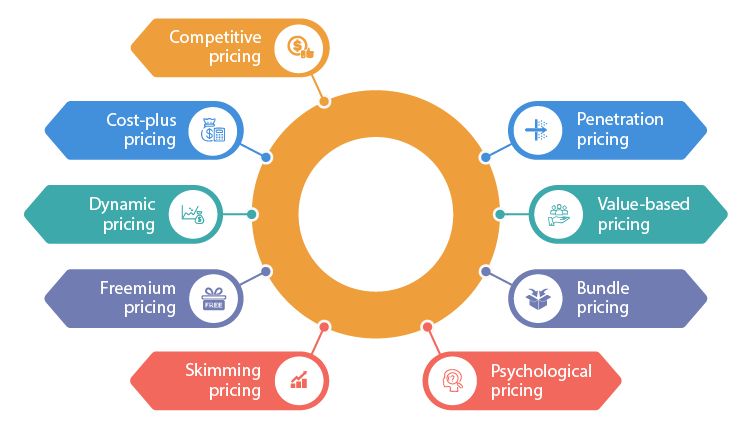
1. Cost-Plus Pricing (The Safety Net)
This is the simplest and safest approach. You calculate your total cost to deliver the product to the buyer (FOB or CIF), and then add your desired profit margin.
When to Use: Ideal for new exporters, highly customized products, or low-volume, specialized orders where precise cost allocation is necessary.
The Danger: If your operational costs are inefficient, this method can result in a price that is easily undercut by global competitors.
2. Marginal Cost Pricing (The Volume Driver)
Instead of factoring in all fixed costs (rent, salaries, etc.), this strategy prices the product based only on its variable costs (raw materials, specific freight, direct labor). Fixed costs are covered by domestic sales or existing operations.
When to Use: Excellent for entering a new, highly price-sensitive market to quickly gain market share, or for utilizing idle production capacity to cover overheads.
The Danger: Must be used selectively. Pricing too many orders this way will fail to cover your long-term fixed expenses.
Pillar 2: Market-Driven Pricing Strategies
These strategies look outward—at the competition and the buyer’s perceived value—to maximize revenue.
3. Competitive Pricing (The Match)
In this approach, you set your price based on the price points offered by key competitors in the target market.
When to Use: When selling a standardized commodity (e.g., generic parts, basic textiles) where differentiation is low and buyers focus heavily on price.
Globax Insight: If you match the price, you must win on service, speed, or credit terms. If you price higher, you must use your website (professional design, certifications, high-quality images) to justify the price with superior value or trust.
4. Value-Based Pricing (The Premium Approach)
This strategy ignores your cost and competition. Instead, you price based on the economic or perceived value your product delivers to the foreign buyer.
Example: If your imported machinery saves the buyer $50,000 annually in labor and maintenance compared to a local model, you can justify a $10,000 premium on your selling price.
When to Use: For innovative, certified organic, or technologically superior products. This requires a strong brand presence and sophisticated communication to prove the value proposition.
Pillar 3: Strategic Market Entry Tactics
These are short-term, aggressive tactics used to gain an immediate foothold in a new market.
5. Penetration Pricing
Tactic: Launching the product at a very low price to rapidly capture a large segment of the market and build brand loyalty. Prices are raised later once market share is secured.
When to Use: Ideal for entering crowded, mature markets, or when economies of scale are vital to reduce per-unit production costs rapidly.
Section 4: The Critical Role of Incoterms in Your Quote
Your pricing strategy is meaningless without correct Incoterm application. Always be prepared to quote based on what the buyer requests:
FOB (Free On Board): Your price includes costs up to loading the ship at the export port.
CIF (Cost, Insurance, Freight): Your price includes the cost of the goods, marine insurance, and freight up to the buyer’s port. This price is higher and more convenient for the buyer.
DDP (Delivered Duty Paid): Your price includes everything, even import duties and taxes in the destination country. This is the highest price but the most attractive to inexperienced international buyers.
Conclusion: Making Price Your Competitive Advantage
Successful export pricing is a dynamic process—it requires continuous refinement, market research, and strategic alignment.
You must choose a strategy (e.g., Cost-Plus for safety, Value-Based for premium) that matches your immediate business goals.
Globax Solutions understands that your pricing strategy is built on your value. A professional, compliant, and SEO-optimized website is essential for communicating that value, justifying premium pricing, and attracting serious, high-margin buyers.
Contact us for more details of & Your registration
Our team will be happy to assist you
Mobile: +91-790-200-2800
