 info@globaxsolutions.com
  +91-790-200-2800
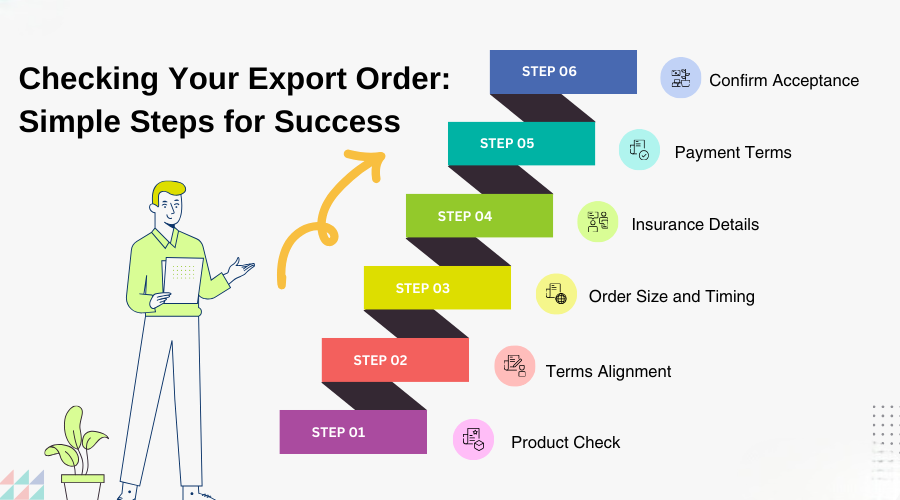
How to Get Export Orders: The GlobaX Solutions 7-Step Strategy
Phase 1: Generating and Qualifying the Lead
Step 1: Strategically Find the Buyer (The Digital Approach)
Stop waiting for buyers on passive B2B portals. The modern exporter uses digital tools to actively prospect.
Trade Data Platforms: Use tools like ITC Trade Map to identify countries with high and growing import demand for your product.
LinkedIn Sales Navigator: Target and connect directly with key decision-makers (Import Managers, Procurement Heads) in specific companies you’ve identified.
Targeted Digital Ads: Run paid ads (Google/LinkedIn) to reach buyers searching for your HS Code and product in high-potential markets.
WhatsApp Groups: Leverage curated Export-Import WhatsApp Groups for instant lead discovery (as detailed in our previous blog).
Step 2: Qualify the Buyer (Is this Lead Real?)
Before you invest time and money, vet the lead. This protects you from fraud and wasted effort.
Request Credentials: Ask for their company registration, import license (IEC equivalent), and website.
Online Footprint: Check their company website, LinkedIn presence, and import data records (if using paid tools like Panjiva/ImportGenius).
Quantify the Need: Ask specific questions: What is the required quantity? What is the Incoterm they prefer (e.g., FOB, CIF)? What are their packaging standards?
The Litmus Test: A genuine buyer will be ready to discuss samples, prices, and terms quickly. A scammer will push for personal information or suspicious payments.
Phase 2: Building Trust and Closing the Deal
Step 3: Submit a Professional Pro Forma Invoice
This is not a final invoice, but a formal offer. Accuracy is paramount, as it sets the expectations for the order.
Crucial Details to Include:
HS Code of the product.
Detailed Incoterm (e.g., FOB Mumbai).
Pricing (clearly stating per unit and total value).
Payment Terms (e.g., 30% Advance, 70% CAD/LC).
Validity Date for the offer.
Step 4: The Sample Strategy
Samples are your product’s handshake with the buyer. Treat the sample process as the first mini-shipment.
Customization: Provide the sample in the specific quantity and packaging the buyer requested.
Professional Documentation: Include a commercial invoice for the sample (often marked as ‘No Commercial Value/Customs Purposes Only’) and detailed quality certifications.
Follow-up: Track the sample delivery closely and follow up immediately after delivery to get feedback.
Step 5: Master the Negotiation and Secure Payment Terms
Negotiation is the art of balancing price, volume, and payment security.
Prioritize Security: For a new buyer, secure payment terms are non-negotiable. Push for Letter of Credit (LC) or a high percentage Advance Payment (30-50%). Avoid ‘Open Account’ terms initially.
Be Flexible on Price (Initially): You can offer a slight discount on the first small order to secure the long-term relationship.
Final Contract: Once terms are agreed upon, convert the Pro Forma Invoice into the final Sales Contract or Purchase Order (PO), signed by both parties.
Phase 3: Processing the Confirmed Order
Step 6: Flawless Order Execution
This phase transforms the promise into reality.
Order Confirmation: Acknowledge the receipt of the signed PO/LC immediately.
Production & Quality Check: Ensure the production process strictly adheres to the specifications agreed upon (dimensions, color, material, quality standard).
Packaging & Marking: Follow the buyer’s instructions exactly (marking codes, port details). Incorrect marking is a major cause of customs delays.
Logistics & Insurance: Book your freight forwarder and ensure adequate Marine Insurance is in place (often required by the Incoterm).
Step 7: Prepare the Export Documentation
The final set of documents is what gets your goods across the border and ensures you get paid.
Mandatory Documents:
Commercial Invoice
Packing List
Bill of Lading / Airway Bill
Certificate of Origin
Shipping Bill / Export Declaration
Contact us for more details of & Your registration
Our team will be happy to assist you
Mobile: +91-790-200-2800