 info@globaxsolutions.com
  +91-790-200-2800
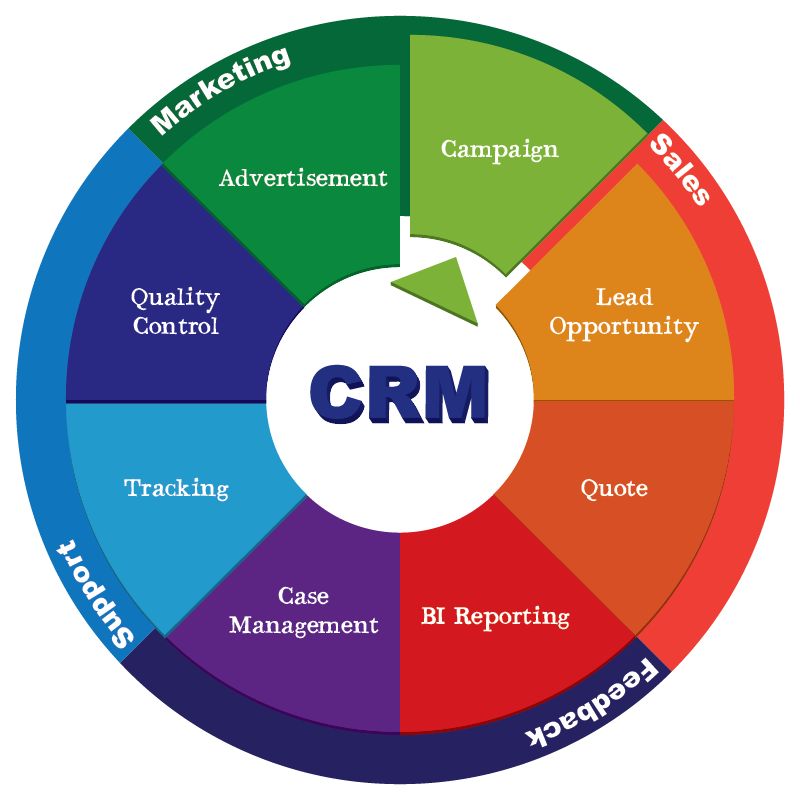
Choosing and Customizing Your Export CRM
Phase 1: Identifying the “Export Gap” in Your Current CRM
Before looking for a new system, understand exactly where your current process breaks down. This gap is always related to data integrity and complexity.
| The Challenge | The Missing CRM Feature | The Consequence |
| Price Instability | Inability to lock in a quote based on a specific foreign exchange rate and expiry date. | Profit erosion or major loss on the deal due to currency swings. |
| Logistical Ambiguity | No mandatory field for the agreed-upon Incoterm (e.g., EXW vs. CIF). | Confusion and disputes over who is responsible for customs, insurance, and freight costs. |
| Compliance Risk | No automated checklist or tracking field for HS Code verification and required trade certificates. | Shipments stuck in customs, incurring demurrage charges, or being refused entry. |
| Slow Onboarding | Lack of integration between the Sales quote and the Logistics/Finance team’s documentation software. | Manual data entry errors multiply, delaying the entire fulfillment process. |
Phase 2: Essential Features of a True Export CRM
Whether you choose an industry-specific CRM or customize a flexible platform like Salesforce, HubSpot, or Zoho, your system must deliver on these five export-specific capabilities:
1. Multi-Currency and Financial Precision
An Export CRM must operate comfortably in a multi-currency environment:
Quote Locking: The system must allow the sales team to quote in the buyer’s local currency but track the committed conversion rate (hedge rate) back to the base currency.
Landed Cost Visibility: Integrate or automate calculations for duties, tariffs, VAT, and freight costs directly into the quote module. This allows the sales team to offer an accurate Delivered Duty Paid (DDP) price instantly, which is a major competitive advantage.
2. Mandatory Logistics Data Capture
The CRM must force the sales team to capture the necessary logistical details needed by the operations team.
Incoterms Field: This should be a required drop-down field at the quote or opportunity stage (e.g., FOB Shanghai, DAP London).
Payment Term Tracking: Log the exact payment terms (e.g., Letter of Credit, T/T 30 Days) and integrate this information with the finance team’s workflow to manage trade finance risk.
Estimated Volume/Weight: Fields to track estimated order dimensions and weight are critical for preliminary freight quoting and inventory allocation.
3. Integrated Compliance Management
Compliance must be a part of the sales record, not an afterthought in a separate spreadsheet.
Customs Data Fields: Dedicated fields to log the required HS Code and Country of Origin for the product within the specific deal record.
Automated Checklists: The CRM should automatically generate a required documentation checklist based on the destination country (e.g., if Destination = UAE, Checklist includes: Certificate of Origin, Legalized Invoice, etc.).
4. Global Contact and Stakeholder Mapping
An international B2B deal often involves multiple decision-makers: the Procurement Manager, the Logistics Director, and the Financial Controller.
The CRM must map all these individuals and track their specific role and level of influence on the deal.
Localized Contact Management: Support for different international address and tax ID formats (e.g., VAT, GST, EIN equivalents).
Phase 3: The Power of Integration: Sales Meets Logistics
The true ROI of an Export CRM is realized when it stops being a standalone sales tool and becomes the nerve center connecting the entire export operation.
| Integration Point | Value to Globax Clients |
| CRM to ERP/Inventory | When a quote is accepted in the CRM, inventory is immediately allocated in the ERP. Eliminates overselling and order fulfillment delays. |
| CRM to Compliance/Automation | When the deal moves to the “Closed-Won” stage, all necessary data (Incoterm, HS Code, Volume) is automatically pushed to customs software. Reduces manual documentation errors by up to 90%. |
| CRM to Globax Solutions Logistics | The sales record is linked to the real-time shipment status. The sales team can track cargo movement and proactively address delays, leading to superior customer service and retention. |
Phase 4: Strategy for High-Performance Follow-Up
An Export CRM is your best tool for maximizing Customer Lifetime Value (CLV) through targeted follow-up.
Segmentation by Compliance: Group clients based on the complexity of their regulatory environment. This allows you to send targeted updates about new EU regulations only to your EU clients.
Revenue Tracking by Logistics Profile: Analyze which Incoterms lead to higher profitability. (e.g., Do FOB sales consistently deliver a better margin than DDP sales?) Use this data to steer the sales team toward higher-margin Incoterms.
Pipeline Longevity: Ensure your pipeline visibility extends far beyond 90 days, accurately reflecting the long, 6- to 18-month cycles common in capital goods or specialized component exports.
Contact us for more details of & Your registration
Our team will be happy to assist you
Mobile: +91-790-200-2800