 info@globaxsolutions.com
  +91-790-200-2800
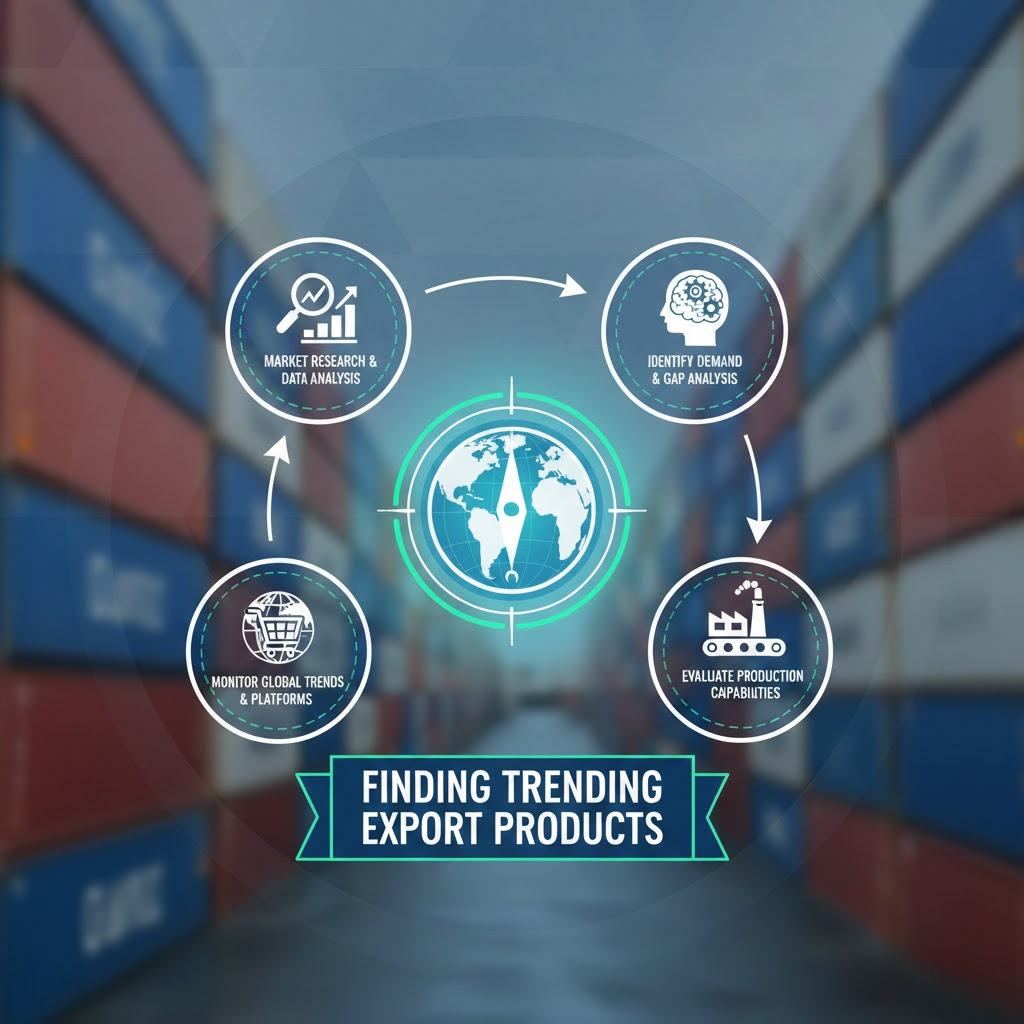
Your Ultimate Guide to Finding Trending Export Products
I. Introduction: The Power of the Right Product
-
Hook: Start with a question: “In the fast-paced world of international trade, what separates a successful exporter from one who struggles?” The answer: choosing the right product at the right time.
-
The Globax Solutions Angle: Mention that success in export starts long before shipment—it begins with data-driven product selection. This guide will show you how to move beyond guesswork and find truly trending, profitable export opportunities.
-
Key takeaway: Trending products offer higher demand, better margins, and a competitive edge.
II. Step 1: The Deep Dive – Market Research & Data Analysis
This is the most critical step and establishes your expertise in using hard data.
A. Utilize Official Trade Data Tools
The best trends are found in trade statistics, not just news headlines.
-
The Power of HS Codes: Explain that all trade data is tracked using Harmonized System (HS) codes. You must search by the 6- or 8-digit code for accuracy, not just a product name.
-
Essential Data Sources:
-
ITC Trade Map (International Trade Centre): Great for global trade volumes, market share, and country-specific demand. Focus on Year-over-Year (YoY) Growth over the last 3-5 years.
-
UN Comtrade Database: A vast repository for benchmarking global export/import figures.
-
National/Regional Trade Data: (If Globax Solutions is focused on a specific region, e.g., India’s DGFT or U.S. Census Bureau data): Mention the local official source for granular detail.
-
-
What to Look For:
-
Consistent Growth: Identify products with steady or accelerating growth in import value.
-
Emerging Markets: Look for countries that are rapidly increasing their imports of your product, indicating a new, underserved market.
-
B. Analyze Consumer Trends & Industry Reports
-
Global Trends: Look for macro-trends driving demand, such as sustainability (eco-friendly packaging, organic products), health and wellness, and digitalization.
-
Industry-Specific Reports: Mention reports from bodies like the World Bank, IMF, or industry-specific associations (e.g., for textiles, pharmaceuticals, or engineering goods).
III. Step 2: The Gap Analysis – Demand Meets Supply
A trend is only an opportunity if the demand outweighs the available supply.
-
Identify Your Market Niche: Once you have a trending product, analyze the competition in the target market.
-
Question to ask: Is the market saturated with a single major supplier (low opportunity) or is the import market diversified (high opportunity)?
-
-
Evaluate Your Competitive Edge (USP): How can your product stand out?
-
Superior Quality: Are you offering better certifications or materials?
-
Price Competitiveness: Can you leverage efficient production or favorable trade agreements?
-
Unique Features: Does your product solve a specific, unaddressed need in the target country?
-
IV. Step 3: Feasibility & Profitability Check
Not all trending products are profitable for your business.
-
Calculate the Landed Cost: This is the true cost. Include:
-
Product Cost + Freight Charges + Insurance + Import Duties/Taxes + Compliance/Certification Costs.
-
-
Regulatory Compliance: Stress the importance of checking the destination country’s standards early (e.g., EU’s CE marking, specific food safety regulations). A trending product with prohibitive regulatory costs is a poor choice.
-
Supply Chain Scalability: Can your production facility reliably meet a potentially massive increase in international demand? Reliability is a competitive advantage.
V. Step 4: Monitoring Digital Trends & Platforms
Use digital tools to gauge market sentiment and immediate demand shifts.
-
Search Engine Data: Use tools like Google Trends to track global interest in your product category (e.g., “organic spices,” “sustainable packaging materials”).
-
B2B E-commerce Platforms: Monitor major global platforms like Alibaba, Amazon Global Selling, and regional marketplaces. What products are they heavily promoting? Which categories are showing high volume of inquiries?
-
Social Listening: Pay attention to social media and news from your target regions to understand local consumer preferences, cultural shifts, and market sentiment that might affect demand.
VI. Conclusion: Your Partner in Global Success
-
Summary: Reiterate that finding trending export products is a systematic process of data analysis, competitive evaluation, and logistical planning.
-
Final Call to Action (The Globax Solutions Value Proposition):
Contact us for more details of & Your registration
Our team will be happy to assist you
Mobile: +91-790-200-2800
