 info@globaxsolutions.com
  +91-790-200-2800
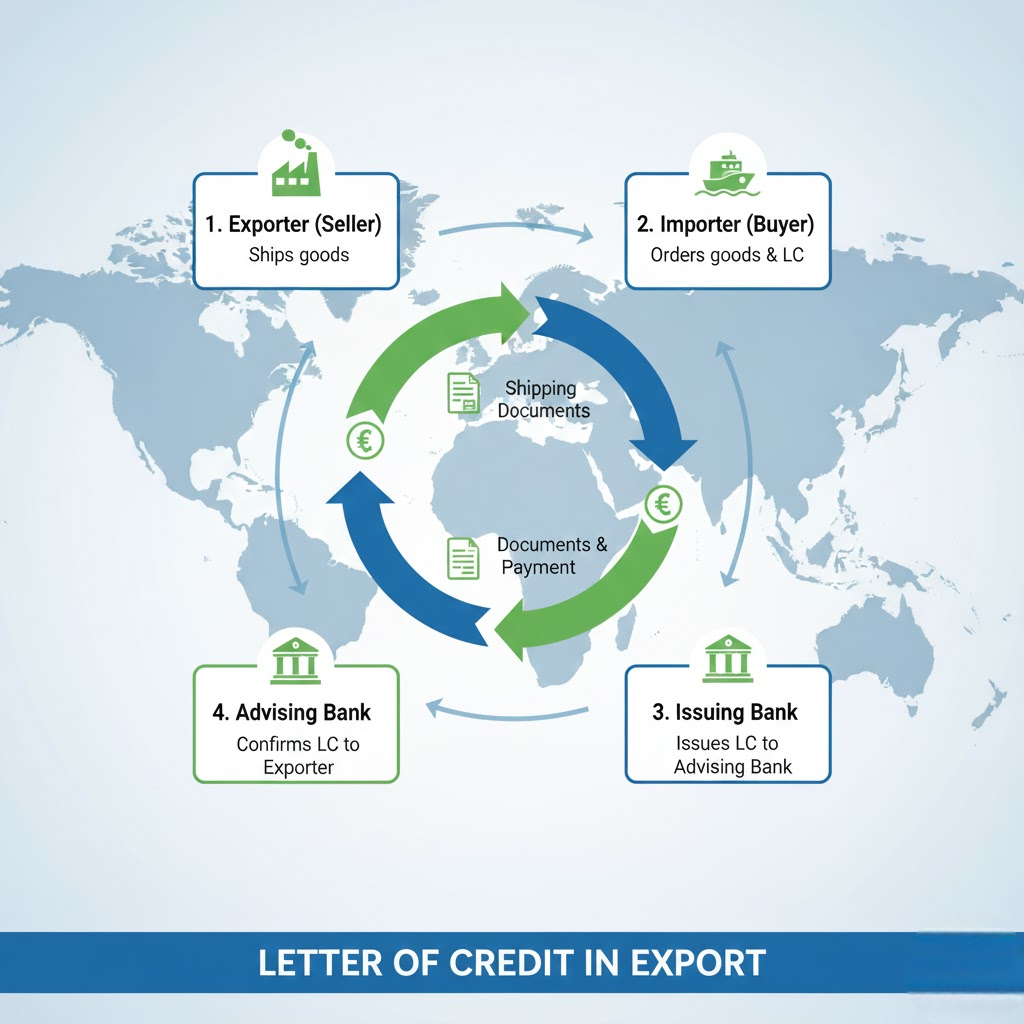
The Exporter's Guide to the Letter of Credit (LC)
ntroduction: Bridving the Trust Gap in International Trade
Catchy Hook: You’ve landed a major international order. The goods are ready, but the buyer is thousands of miles away, and you’ve never worked with them before. How do you guarantee you get paid?
The Answer: The Letter of Credit (LC), also known as a Documentary Credit.
Globax Solutions Intro: At Globax Solutions, we know that secure payment is the foundation of successful export. An LC shifts the risk from the buyer to a reputable financial institution.
What is a Letter of Credit (LC)?
Simple Definition: An LC is a written commitment by a bank (the Issuing Bank, on behalf of the Importer/Buyer) to pay the Exporter/Seller (the Beneficiary) a specified amount, provided the exporter presents a set of strictly compliant documents as outlined in the LC.
The Golden Rule: Banks deal in documents, not goods. This is a document-driven guarantee. If your paperwork is perfect and matches the LC terms, the bank must pay, regardless of the buyer’s ability or willingness to pay.
The Key Parties Involved in an LC Transaction
| Party | Role | Function |
| Applicant / Importer | The Buyer | Requests their bank to issue the LC. |
| Issuing Bank | The Buyer’s Bank | Issues the LC and promises payment. |
| Beneficiary / Exporter | The Seller | Receives the LC and is the one who gets paid. |
| Advising Bank | The Exporter’s Bank | Verifies the LC’s authenticity and forwards it to the exporter. |
| Confirming Bank | An additional Bank (optional) | Adds its own guarantee to the LC, providing the exporter with a double assurance of payment. |
Step-by-Step: The LC Process for an Exporter
Sales Contract & Agreement: The Exporter and Importer agree on the sale terms, including that payment will be by Irrevocable Letter of Credit, governed by UCP 600 (Uniform Customs and Practice for Documentary Credits).
LC Application: The Importer applies to their Issuing Bank to open the LC in the Exporter’s favour.
LC Issuance & Advice: The Issuing Bank sends the LC to the Advising Bank (the Exporter’s bank). The Advising Bank verifies it and passes it to the Exporter.
Exporter Review (Crucial!): The Exporter must immediately review the LC. Can you meet every single term (shipment date, document deadlines, specific documents)? If not, request an amendment right away.
Shipment of Goods: Once satisfied, the Exporter ships the goods as specified in the LC (e.g., to the correct port by the latest date).
Document Presentation: The Exporter gathers all required documents (Bill of Lading, Commercial Invoice, Packing List, Certificate of Origin, etc.) and submits them to the Advising Bank.
Document Check: The banks meticulously check the documents for strict compliance with the LC terms.
Payment: If the documents are compliant (“clean”), the Issuing Bank releases the payment to the Exporter (via the Advising Bank). The documents are then released to the Importer to claim the goods.
The Exporter’s Advantage: Why Use an LC?
Payment Assurance: The biggest benefit. Your payment is guaranteed by a bank, removing the credit risk of the foreign buyer.
Confidentiality: You don’t need to know the Importer’s credit standing; you only need to trust the Issuing Bank (and the Confirming Bank, if confirmed).
Access to Finance: A clean, irrevocable LC can often be used as collateral to obtain pre-shipment financing from your local bank.
Defined Terms: The LC provides a clear, legally defined framework for the transaction, reducing disputes over terms.
Types of LCs: Know Your Security Level
Irrevocable LC: Cannot be cancelled or amended without the agreement of all parties. This is the standard and most secure type you should request.
Confirmed LC: Provides a double guarantee. Your local bank (the Confirming Bank) adds its promise to pay, protecting you against the financial risk of the Issuing Bank or the country where it is located. Highly recommended for new/risky markets.
Sight LC: Payment is made immediately upon presentation of compliant documents.
Usance/Time LC: Payment is made after a specified period (e.g., 30, 60, or 90 days) after document presentation.
The Exporter’s Risk: The Dangers of Discrepancies
The single greatest risk for an exporter is the discrepancy.
This is why meticulous preparation and professional handling of documentation are non-negotiable. Common discrepancies include:
Late shipment.
Expired presentation period.
Inconsistency between the commercial invoice and the LC’s description of goods.
Typographical errors (e.g., “ten” instead of “10” or “Global Solutions” instead of “Globax Solutions”).
Contact us for more details of & Your registration
Our team will be happy to assist you
Mobile: +91-790-200-2800
