 info@globaxsolutions.com
  +91-790-200-2800
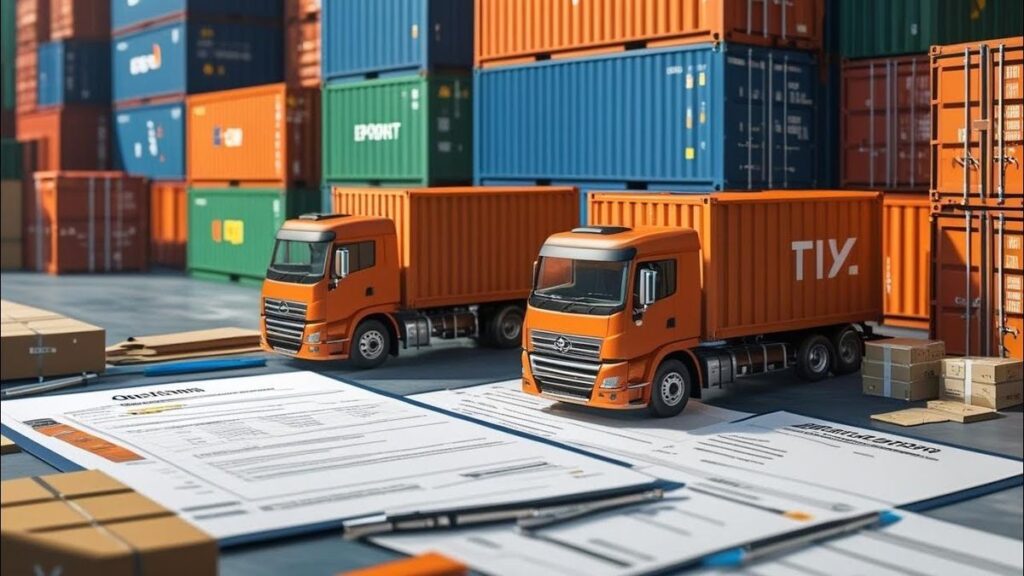
The Essential Export Documentation List: Your Checklist for Customs and Compliance
Introduction: Documentation is the Backbone of Export
Hook: You have secured your foreign buyer, the goods are packed, and the vessel is ready. But what keeps a shipment moving—or stops it dead—is paperwork. Accurate documentation is non-negotiable in international trade.
The Globax Principle: Errors in documents can lead to customs penalties, warehousing fees, and irreversible damage to buyer relationships. We believe every successful exporter must master the required paperwork.
Promise: This guide provides the definitive checklist of export documentation, categorized by function, ensuring your next shipment clears customs efficiently.
Part I: Commercial and Financial Documents (The Basics)
These documents finalize the sales contract and establish the financial terms.
1. Commercial Invoice (The Bill)
Purpose: The seller’s formal demand for payment from the buyer. It is the most critical document for customs valuation, duty assessment, and foreign exchange.
Must Include: Seller and buyer names/addresses, Incoterm used (e.g., FOB Mumbai), detailed product description, quantity, unit price, total value, and the HS Code (Harmonized System Code).
2. Packing List
Purpose: Details the contents, weight, and dimensions of each package/container. Used by customs to verify cargo and by carriers for handling.
Must Include: Package count, gross and net weight, dimensions, and shipping marks/numbers. Must align perfectly with the Commercial Invoice.
3. Pro Forma Invoice (Pre-Shipment)
Purpose: Not a financial document, but a quote that confirms the terms of sale before the final agreement. It locks in the pricing, Incoterm, and payment method.
Part II: Shipping and Logistics Documents (The Transit)
These documents manage the physical movement and transfer of ownership.
4. Bill of Lading (B/L) / Air Waybill (AWB)
Purpose: This is the contract between the shipper (exporter) and the carrier (shipping line or airline). It serves three key functions:
Contract of Carriage
Receipt of Goods
Document of Title (B/L only; allows the holder to claim the goods).
Key Detail: Must correctly state the shipper, consignee, notification party, vessel/flight details, and port of loading/discharge.
5. Lorry Receipt (L/R) / Truck Waybill
Purpose: Document issued by the road transport company when goods are picked up from the exporter’s factory/warehouse for delivery to the port/CFS (Container Freight Station).
6. Insurance Certificate
Purpose: Provides proof that the cargo is insured against loss or damage during transit, particularly required when the Incoterm (e.g., CIF or CIP) dictates the seller must arrange insurance.
Part III: Regulatory and Mandatory Documents (The Compliance)
These are filed with government authorities and certification bodies.
7. Shipping Bill (For Exporters)
Purpose: The primary document filed with Indian Customs by the exporter (via their CHA/Freight Forwarder). It provides details of the goods, destination, and exporter to obtain “Let Export” clearance.
Filing Method: Filed electronically through the customs system (e.g., ICEGATE).
8. Bill of Entry (For Importers – Globax Note)
Purpose: While not an export document, it is the corresponding mandatory document filed by the importer at their customs port to gain entry for the goods and pay duties.
9. Certificate of Origin (COO)
Purpose: Certifies the country where the goods were manufactured or processed. Required by the importing country’s customs to determine eligibility for preferential tariff rates under various Free Trade Agreements (FTAs).
Issuance: Issued by government-authorized agencies (e.g., Chamber of Commerce, Export Promotion Councils).
10. Inspection/Quality Control Certificate
Purpose: Required for certain products or by specific buyers to certify that the goods meet contract specifications and quality standards (often issued by a third-party inspection agency).
Contact us for more details of & Your registration
Our team will be happy to assist you
Mobile: +91-790-200-2800
