 info@globaxsolutions.com
  +91-790-200-2800
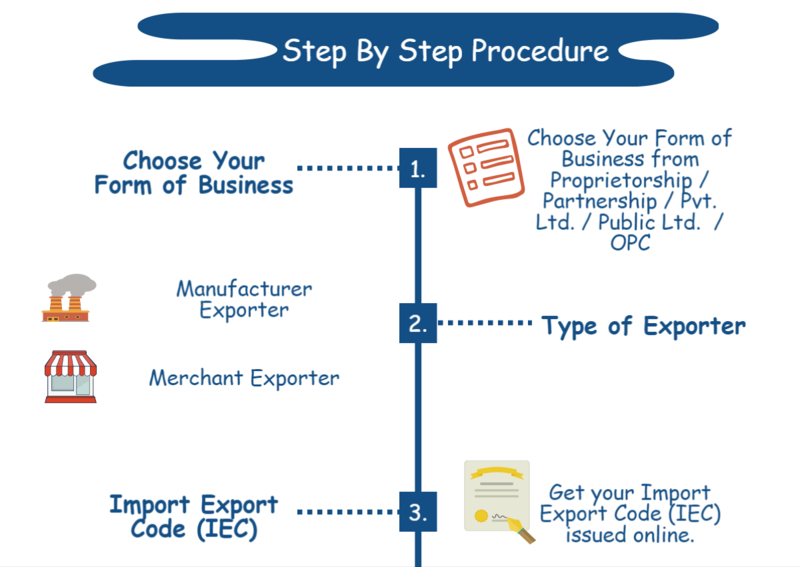
The 8-Step Launchpad: Your Step-by-Step Guide to Starting a Profitable Export Business
Introduction: Your Path to Global Markets
Hook: Imagine your product reaching customers on another continent. Exporting is the most direct way to scale your business and stabilize revenue by diversifying markets.
The Globax Approach: The export journey is methodical, not mysterious. At Globax Solutions, we’ve broken down the entire process into eight clear, actionable steps.
Promise: Follow this step-by-step launchpad, and you will have the foundation required to start, manage, and scale a compliant and profitable export business.
Step 1: Market Research and Product Selection (The “What” and “Where”)
A successful export strategy starts with a high-demand, high-profit product-market fit.
Identify the Niche: Don’t export everything. Focus on a product where your local region has a quality, cost, or supply advantage.
Research Demand: Use government trade portals (like DGFT reports) and international databases (like UN Comtrade) to identify countries that currently import your product in large volumes.
Analyze Barriers: Check for tariffs, non-tariff barriers (like specific quality standards), and competitors in the target country.
Step 2: Legal Establishment and Essential Registration
Compliance is the foundation of trustworthy global trade.
Business Structure: Register your company (Pvt. Ltd., LLP, etc.).
Bank Account: Open a current account authorized for foreign exchange transactions.
The Mandatories:
Permanent Account Number (PAN): Required for the business entity.
Import Export Code (IEC): Obtain this mandatory 10-digit code from the DGFT. Without the IEC, you cannot export.
RCMC: Register with the appropriate Export Promotion Council (EPC) based on your product (e.g., FIEO, APEDA).
Step 3: Financial Planning and Risk Mitigation
Plan for the capital needs and inherent risks of international transactions.
Costing: Calculate your Export Price accurately. This includes product cost, packaging, insurance, customs charges, freight, and margin.
Accessing Finance: Explore pre-shipment (e.g., Packing Credit) and post-shipment financing options from your bank.
Payment Security: Prioritize secure payment terms, such as Letter of Credit (LC) for new buyers, or CAD (Cash Against Documents).
Globax Insight: Invest in Marine/Cargo Insurance. It is a critical, non-negotiable step to protect your goods during transit.
Step 4: Finding Reliable Foreign Buyers (The Sales Strategy)
This is where your product meets the world.
Digital Presence: Build a professional, global-facing website. International buyers vet potential partners digitally before any contact.
B2B Platforms: Use reputable online marketplaces.
Trade Fairs: Participate in international and domestic trade exhibitions related to your product niche.
The Globax Advantage: Utilize targeted international digital marketing (SEO & LinkedIn outreach) to proactively find and qualify buyers in your target countries. (This is often more efficient than relying solely on trade fairs).
Step 5: Product Sampling and Order Confirmation
The formal start of the transaction.
Sampling: Send samples with clear specifications to secure the buyer’s approval.
Pro Forma Invoice: Send a detailed Pro Forma Invoice which acts as a preliminary sales quote. It specifies the product details, price, payment terms, delivery schedule, and most importantly, the Incoterm (covered in Step 6).
Contract: Once the terms are agreed upon, convert the Pro Forma into a formal, legally binding contract or purchase order.
Step 6: Mastering Incoterms and Logistics
Incoterms define responsibility; logistics determine profitability.
Understand Incoterms 2020: Clearly specify the term (e.g., FOB, CIF, DDP). This legally determines who pays for freight, who insures the goods, and exactly when the risk transfers from you (the seller) to the buyer.
Choose a Freight Forwarder: Partner with a reputable Customs House Agent (CHA) or Freight Forwarder. They manage the complex physical movement of goods, vessel booking, and customs filing (Shipping Bill).
Packaging: Ensure packaging meets international standards and protects the goods from temperature, moisture, and rough handling during transit.
Step 7: Pre-Shipment Documentation and Customs Clearance
Perfect documentation is mandatory for smooth passage.
Ready the Documents: Prepare the Commercial Invoice, Packing List, Certificate of Origin, Inspection Certificate (if required), and the Bill of Lading (B/L) or Air Waybill (AWB).
Customs: Your CHA files the Shipping Bill with Customs. The goods are then physically inspected (unless Green Channel access is provided) and “Let Export” clearance is granted.
Step 8: Post-Shipment Formalities and Payment Realization
The final steps to close the deal and secure your funds.
Submitting Documents: Dispatch the original transport documents (B/L or AWB) and commercial documents to the buyer or the buyer’s bank as per the agreed-upon payment terms.
Payment Realization: Ensure the full payment for the goods is received within the specified time frame, typically via a secure channel like an authorized dealer bank.
Claiming Benefits: File for any export incentives (like Duty Drawback or Rebate of State Levies) you are entitled to.
Contact us for more details of & Your registration
Our team will be happy to assist you
Mobile: +91-790-200-2800
