 info@globaxsolutions.com
  +91-790-200-2800
Advance payment export
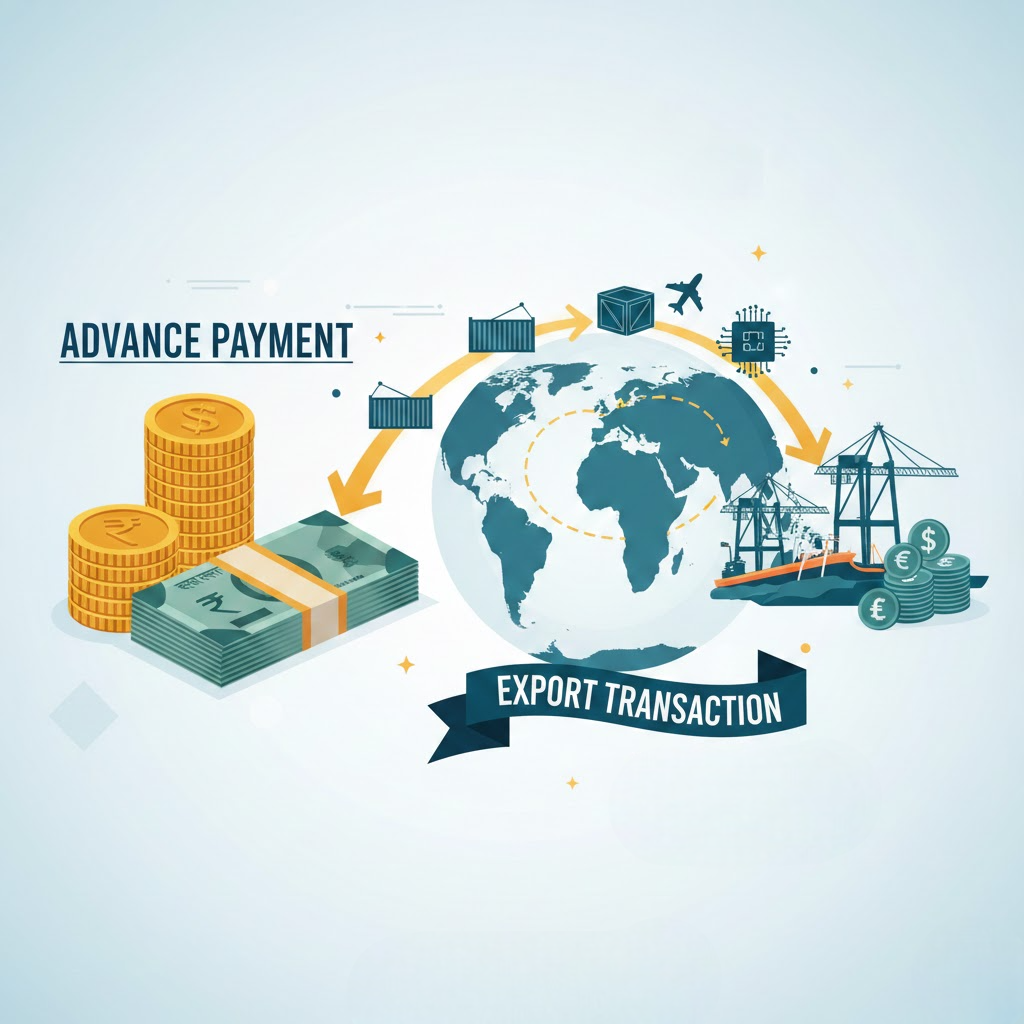
The Globax Solutions Guide to Advance Payment: Ensuring 100% Secure Cash Flow in Export Transactions
Introduction: Mitigating the Biggest Export Risk
In the complex world of global trade, the single greatest concern for any exporter is the risk of non-payment. While profitability is the goal, financial security is the absolute prerequisite.
This is where the Advance Payment or Cash-in-Advance (C-I-A) method stands out. It’s the gold standard for financial safety, ensuring that you—the exporter—receive full or partial payment before your goods leave the warehouse.
At Globax Solutions, we empower you to negotiate and manage these terms confidently, transforming payment risk into guaranteed cash flow. Read on to understand why Advance Payment should be your default strategy and how to execute it flawlessly.
3 Pillars of Safety: Why C-I-A is the Exporter’s Best Friend
Advance Payment is the most secure method of trade finance because it shifts the financial risk entirely to the buyer. Here is why it is the superior choice:
1. Eliminating Credit Risk
With Cash-in-Advance, the problem of buyer default is literally non-existent. You are not extending credit; you are receiving the cash before you spend on shipping and logistics. This provides 100% assurance that your revenue is secured.
2. Immediate Cash Flow & Working Capital
Unlike documentary credits (L/C) or open accounts, C-I-A provides you with funds upfront.
You can immediately use this capital to finance production, purchase raw materials, and cover initial expenses.
This significantly reduces the need for external working capital loans, thereby lowering your operating costs.
3. Simplified Documentation & Lower Fees
Methods like Letter of Credit (L/C) require rigorous documentation, specific clauses, and high bank fees for verification and confirmation. Advance Payment bypasses much of this complexity, saving you time, reducing administrative errors, and lowering bank charges.
Strategic Implementation: Types and Terms
While 100% Advance is the ultimate goal, often a strategic negotiation leads to a Partial Advance structure, which is more palatable for the buyer while still protecting the seller.
| Payment Type | Description | Globax Recommendation |
| 100% Advance | Full payment is received before shipment. | Ideal for new buyers, highly customized goods, or small orders where the risk-reward ratio is high. |
| Partial Advance | A deposit (e.g., 30% to 50%) is received upon order, and the balance is paid before the final Bill of Lading (B/L) is released. | The most common and balanced approach. Ensure the deposit covers your total production costs. |
Acceptable Payment Methods:
The most secure way to receive advance payment is via Wire Transfer (Telegraphic Transfer/TT) through your bank, using the standard SWIFT network. For small B2C or e-commerce exports, credit card payments or trusted escrow services may also be used.
The 4-Step Process: Executing the Advance Payment Export
A successful C-I-A transaction requires meticulous compliance, especially regarding the receipt of foreign currency.
Step 1: Issue a Compliant Proforma Invoice
Your Proforma Invoice must clearly and unambiguously state the payment terms, for example: “Payment Terms: 30% Advance via TT, Balance 70% against Scanned Bill of Lading.” Include all necessary banking details (Bank Name, Address, SWIFT/BIC Code, Account Number).
Step 2: Receive and Confirm Funds
Once the buyer wires the payment, your bank will credit your account. Crucially, confirm that the payment amount is accurate and the currency exchange rate is as expected.
Step 3: Obtain the FIRC (Foreign Inward Remittance Certificate)
For Indian exporters, this step is mandatory for regulatory compliance. The Foreign Inward Remittance Certificate (FIRC) is the official document issued by your bank as proof that foreign currency has been received into your account. The FIRC is required for RBI reporting and GST/Income Tax purposes.
Step 4: Manufacture, Ship, and Finalize
Only after the funds are confirmed and the FIRC process is initiated should you begin production and shipment. If a balance payment is due, notify the buyer once the goods are ready. Upon receiving the final amount, dispatch the goods and send the complete set of shipping documents.
Globax Solutions: Your Partner in Payment Security
Navigating international payment compliance can be challenging. Globax Solutions simplifies this process, acting as your expert guide:
FIRC & Compliance Assurance: We ensure you receive the correct FIRC documentation, keeping your business compliant with FEMA and RBI regulations.
Documentation Vetting: Our team reviews your Proforma and Commercial Invoices to ensure the payment terms are legally sound and protect your interests at every stage.
Negotiation Strategy: We provide advisory services to help you successfully negotiate Advance Payment terms, even with demanding buyers.
Contact us for more details of & Your registration
Our team will be happy to assist you
Mobile: +91-790-200-2800